Knowing how to hold a Padel racket may not seem like a big ideal but it can have a massive impact on how you hit a ball. This beginner guide will break down different types of grips and the importance of holding the padel racket a certain way. One of the first things any padel coach will check is how you’re holding your racket. Grip is the foundation of every shot in padel and by getting it wrong and you’ll struggle to develop consistency no matter how much you play. Get it right from the start and everything else becomes easier.
Here’s a complete guide to padel grip for beginners.
How to Hold a Padel Racket: Why Grip Matters in Padel
Unlike tennis where players use multiple different grips for different shots, padel is simpler because most players use one or two grips for the majority of their game. This is part of what makes padel more accessible for beginners.
The right grip gives you:
- Control over the direction and pace of your shots
- Wrist flexibility to generate spin and adjust at the last moment
- Comfort during long sessions without fatigue or strain
- Consistency — the same grip produces the same shot every time
The Continental Grip — The Foundation of Padel
The continental grip is the most important grip in padel. It’s used for serves, volleys, and defensive shots, and many players use it for almost everything.
How to find the continental grip:
- Hold your racket by the handle and point the face towards the ground so the edge faces up (like you’re about to chop something with an axe).
- Place your hand on the handle as if you’re shaking hands with it
- Your index knuckle should sit on the top flat edge of the handle
- Your thumb should wrap naturally around the other side
The easiest way to find it: hold the racket by the frame and let the handle dangle down. Then grab the handle naturally — that’s roughly the continental grip.
When to use it: Serves, volleys, defensive shots off the back wall, overhead shots.
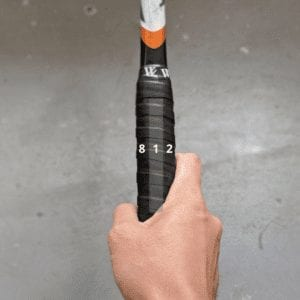
The Eastern Grip — For Groundstrokes
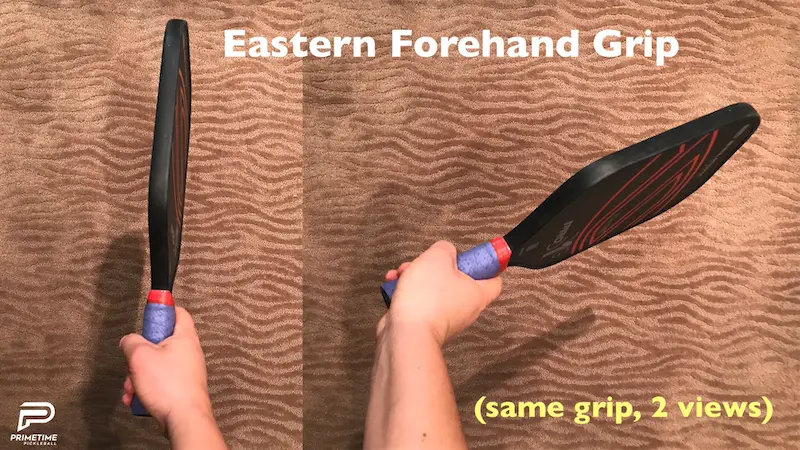
The eastern grip is used by many players for forehand groundstrokes — shots hit after the ball has bounced.
How to find the eastern grip:
- Start from the continental grip
- Rotate your hand slightly to the right (for right-handed players) or left (for left-handed players) so your index knuckle moves to the right or left bevel of the handle
- Your palm should feel more behind the handle rather than on top of it
When to use it: Forehand groundstrokes, mid-court shots.
The Western Grip — Use With Caution
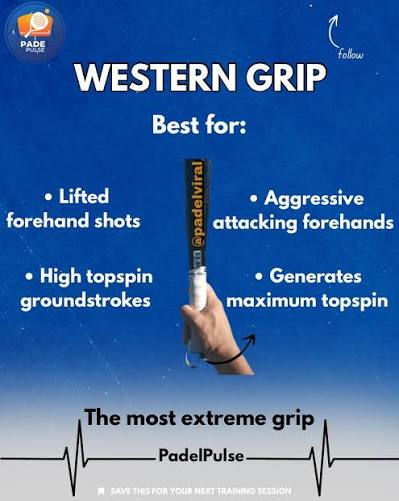
The western grip involves rotating the hand further so the palm is almost underneath the handle. Some players use this for heavy topspin shots but it’s not recommended for beginners because it makes volleys and shots above shoulder height very difficult.
Verdict for beginners: Avoid the western grip until you have a solid foundation in the continental and eastern grips.
Grip Pressure — The Most Overlooked Element
How tightly you hold the racket matters as much as which grip you use. Most beginners hold the racket far too tightly, which causes several problems:
- Arm fatigue during longer sessions
- Loss of feel — you can’t sense the ball on the racket face
- Reduced wrist flexibility — making spin and last-minute adjustments harder
- Tennis elbow — tight grip is a leading cause of this common injury
The right grip pressure: Imagine you’re holding a small bird — firm enough that it can’t fly away, gentle enough that you’re not crushing it. Your grip should tighten slightly at the moment of contact and relax again immediately after.
Common Grip Mistakes Beginners Make
Gripping too tightly: The most common mistake. Relax your hand and let the racket do the work.
Changing grip mid-rally: Unlike tennis, you don’t need to change grip constantly in padel. The continental grip handles most situations — keep it simple.
Holding too low on the handle: Some beginners choke up on the handle thinking it gives more control. It actually reduces power and feel. Hold at the base of the handle with your little finger near the bottom.
Letting the racket twist on contact: If the racket is twisting when you hit, your grip is too loose or your technique needs work. A firm but relaxed grip at the moment of contact keeps the face stable.
How to Practice Your Grip
The bounce test: Hold the racket with your continental grip and bounce the ball on the face repeatedly — first forehand side, then backhand side. If you can do 20 consecutive bounces on each side, your grip is solid.
Shadow swinging: Stand in front of a mirror and practice your swing without a ball. Check that your grip stays consistent throughout the swing and doesn’t rotate at contact.
Wall practice: Find a wall and hit the ball against it repeatedly. Wall practice is one of the best ways to develop grip consistency because the ball comes back quickly and forces you to reset your grip naturally.
Does Grip Size Matter?
Yes — but it’s less critical in padel than tennis because padel handles are shorter. A grip that’s too thin causes the racket to rotate in your hand on contact. A grip that’s too thick restricts wrist movement.
How to check: When you hold the racket in your continental grip, your fingers should wrap around the handle with a small gap between your fingertips and your palm. If your fingers overlap your palm, the grip is too thin. If there’s a large gap, it’s too thick.
Most padel rackets come in a standard grip size that suits the majority of players. If you find the grip uncomfortable, overgrips and replacement grips can adjust the thickness easily and cheaply.
Overgrips — Worth Using?
Yes. An overgrip is a thin wrap applied over the existing handle that improves feel, absorbs sweat, and can slightly increase grip thickness. Most regular padel players replace their overgrip every few sessions.
We cover overgrips and grip tape in our dedicated guide to the best padel grips.
Frequently Asked Questions
Should I use the same grip for forehand and backhand in padel?
Many beginners use the continental grip for both forehand and backhand, which works well. As you develop, you may adopt a slight adjustment for forehand groundstrokes but it’s not essential early on.
How do I stop the racket from slipping?
Use an overgrip and make sure your hands are dry before play. Some players use grip powder or a sweatband on their wrist to manage moisture during longer sessions.
Does grip matter as much in padel as in tennis?
It matters but is less complex. Tennis requires multiple grip changes throughout a match. Padel’s continental grip handles the majority of situations, making it simpler to master.
How long does it take to develop a consistent grip?
With regular practice, most beginners develop a comfortable, consistent grip within 4-6 weeks of regular play.
Now you’ve got your grip sorted, make sure the rest of your kit is up to scratch. Check out our guides to the best padel rackets for beginners, best padel shoes for men, and best padel bags.